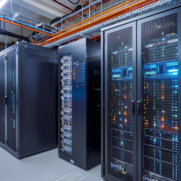
One area data centers are constantly looking to improve is their energy efficiency. With servers running chips and processors 24/7 and cooling systems trying to keep up, it’s no surprise that over 30% of a facility’s total energy consumption often comes from the cooling systems. Highly optimized facilities, however, can reduce their cooling costs to somewhere around 7%. One piece of the optimization puzzle for those energy-efficient data centers? Perforated metal.
With the right perforation pattern, engineers can control where and how air moves through the data center’s server racks, equipment enclosures, raised floors, and cooling systems. Keep reading to see how perforated metal helps the entire facility’s thermal-management strategy work more effectively.
How Does Perforated Metal Improve Data Center Energy Efficiency?
Perforated metal makes data centers more energy efficient by directing conditioned air where the equipment needs it, reducing airflow resistance, and helping to limit hot spots and air mixing. Engineers can optimize hole size, spacing, pattern, and open area to optimize server cooling, which allows the facility’s equipment to operate more efficiently.
Maximizing Airflow for Energy-Efficient Data Centers
Cooling is a major operational challenge for any data center. Servers, networking hardware, storage systems, and other IT equipment continuously generate heat, and that heat must be removed to maintain reliable operating temperatures inside the facility.
Airflow problems make that job harder. Restrictions, bypass air, and the uncontrolled mixing of hot and cold air all force the data center’s cooling systems to compensate. Fans may run harder, computer room air conditioners may need to deliver more cooling, and operators may struggle with hot spots.
Effective airflow management attacks the problem at its source – a strategy that starts with perforated metal. Instead of simply adding more cooling capacity, designers can create custom panels that help conditioned air efficiently reach intakes and give heated exhaust air a clear path away from the equipment.
How Does Perforated Metal Improve Server Rack Airflow?
Server racks need a steady supply of cool air and a clear path for hot exhaust. While solid panels often restrict that movement, a properly engineered perforated panel allows air to pass through the rack or enclosure while still protecting the equipment inside.
At Roy Manufacturing, we’ve found that custom perforation panels often make a meaningful difference in data center airflow performance. Engineers can build more energy-efficient data centers by specifying their:
- Hole diameter and size
- Round, square, slotted, or custom hole shapes
- Straight or staggered patterns
- Open area percentage
- Material thickness
- Panel dimensions
- Edge margins
- Secondary fabrication requirements
These variables give engineers much more control than a one-size-fits-all ventilation panel. That means a project team can balance airflow, strength, equipment protection, appearance, and fabrication requirements around their specific rack or enclosure.
How Can Open Area Reduce Data Center Cooling Demand?
Open area plays a major role in airflow performance. A pattern with insufficient open area can create excessive resistance and make fans work harder to pull or push air through the panel. Increasing open area can improve airflow, but designers still need enough material to meet their structural and protective requirements. That means perforation design is more of a balancing act rather than simply choosing the largest opening possible.
In our experience, project requirements should be the driving force behind hole size, spacing, pattern, material, and open-area percentage selections. When manufacturers match those specs to the required airflow, they can optimize cooling performance while maintaining the panel’s structural integrity.
How Do Perforated Floor Panels Support Hot-Aisle and Cold-Aisle Cooling?
Data centers typically organize their server racks in hot-aisle and cold-aisle arrangements. The fronts of the servers face the cold aisle, and the rear exhaust sides face the hot aisle. In data centers with raised floors, cooling systems can send conditioned air through the underfloor plenum and up through perforated panels in the cold aisle.
Strategic placement matters in these setups. Perforated flooring should deliver cool air to where the server intakes can use it instead of letting conditioned air escape into areas that don’t need it. When operators place too much open flooring in the wrong location, they can create bypass airflow, which reduces cooling efficiency.
Engineers can avoid this effect by using perforation patterns and open-area specifications to match airflow delivery with the heat load in a particular aisle. This targeted approach supports more energy-efficient data centers with better temperature control and a more effective use of the cooling system’s capacity.
Can Perforated Metal Help Reduce Data Center Hot Spots?
Yes. Hot spots develop when servers receive inadequate cool air or when hot exhaust recirculates toward equipment intakes. Perforated metal can’t solve every thermal-management problem on its own, but it can help eliminate airflow restrictions that lead to uneven cooling.
Based on client results, well-planned perforated panels can:
- Improve cool-air access at server intakes
- Give hot exhaust air a less restrictive exit path
- Support more consistent airflow through rack enclosures
- Help engineers direct air toward higher-density equipment
- Reduce unnecessary airflow resistance
- Complement aisle containment and other airflow-management strategies
When designers combine these elements with effective room layouts and properly sized cooling equipment, they create more predictable thermal conditions throughout the data center.
Does Perforated Metal Make Data Centers More Energy-Efficient as Rack Density Increases?
Higher-density computing creates greater heat loads within the same square footage. That puts more pressure on cooling infrastructure and makes precise airflow management even more important.
Simply increasing fan speeds or adding cooling capacity tends to raise a data center’s energy consumption without fixing its poor air distribution. We’ve found that facility managers see more value when they remove unnecessary airflow restrictions and make sure cool air reaches the equipment that needs it.
Custom perforated metal for data centers gives equipment manufacturers and facility designers a way to fine-tune airflow for changing rack configurations and heat loads. Rather than treating ventilation panels as generic covers, engineers can specify them as functional components of the cooling system, leading to more energy-efficient data centers.
What Materials Work Well for Perforated Data Center Components?
Material selection depends on the component, environment, strength and weight requirements, finish, and overall design. We also recommend considering the perforation pattern when choosing your material. Hole geometry, spacing, sheet thickness, and open area all influence how a finished component performs.
At Roy Manufacturing, we work with a range of materials to meet varying demands, including steel, stainless steel, and aluminum. Each option offers different advantages. For example, aluminum can help reduce component weight, while steel provides strong, durable construction, and stainless steel offers durability and corrosion resistance.
How Can Energy-Efficient Data Centers Use Perforated Metal?
Perforated metal can enhance airflow and equipment protection across a data center. Common applications include:
- Server rack doors and side panels
- Equipment cabinets and enclosures
- Raised-floor ventilation panels
- Cooling-system grilles and screens
- Fan guards and protective covers
- Air intake and exhaust panels
- Mechanical equipment housings
- Custom ventilation components
In our experience, each application requires a different balance of airflow, strength, security, visibility, and appearance. We recommend custom perforation to stipulate those specs instead of adapting your project around a standard panel.
How Should Engineers Specify Perforated Metal for Data Center Cooling?
Project teams should identify how much air needs to pass through the component, what structural demands the component has to handle, and how the panels fits into the broader cooling strategy.
Engineers should consider the following when requesting a custom perforated component.
- Required airflow: Determine how much ventilation the equipment or enclosure needs.
- Open area: Select an appropriate percentage to support airflow and maintain strength.
- Hole geometry: Choose the size, shape, spacing, and arrangement that best suit the application.
- Material and thickness: Match the metal to structural, environmental, and fabrication requirements.
- Panel dimensions and margins: Account for mounting points, hardware, bends, and other fabrication details.
- Secondary operations: Plan for forming, shearing, deburring, finishing, or other fabrication needs.
Roy Manufacturing Supports Smarter Data Center Cooling
Energy-efficient data centers depend on high-efficiency cooling equipment, as well as thoughtful air management. Perforated metal gives designers a durable, customizable way to manage airflow from the cooling source all the way to the individual server components.
By specifying the right hole pattern, open area, material, and panel configuration, data center teams can reduce airflow resistance, support more effective hot and cold aisle strategies, minimize hot spots, and help cooling systems operate more efficiently.
At Roy Manufacturing, our team has over 60 years of experience delivering custom panels for demanding industrial applications. We support energy-efficient data centers with solutions that meet exact specs for airflow, material, fabrication, and production requirements. Contact us today for a same-day quote.
Frequently Asked Questions
What perforation pattern works best for airflow in energy-efficient data centers?
The best pattern depends on airflow requirements, structural needs, material thickness, panel size, and equipment design. Engineers often evaluate hole size, spacing, arrangement, and open area together rather than choosing a pattern based on hole shape alone.
Does more open area always improve data center cooling?
No. A greater open area can reduce airflow resistance, but every component still needs enough material to meet its structural and protective requirements. The optimal percentage balances airflow performance with strength and application-specific demands.
Where should perforated floor panels go in a data center?
In a conventional raised-floor hot-aisle and cold-aisle layout, perforated panels typically supply conditioned air through the cold aisle near server intakes. Proper placement helps limit bypass airflow and directs cooling capacity toward IT equipment.