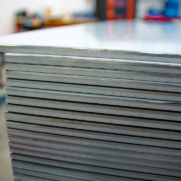
Architects and designers use perforated metal for everything from decorative privacy screens and building facades to sunshades, railings, and exterior accents. Whether they’re decorative or functional, what makes these custom perforated architectural metal panels work is choosing not just the right perforation pattern but the right material thickness. Keep reading to see exactly how material thickness influences a panel’s appearance, strength, weight, and fabrication process.
What Metal Thicknesses Can Be Custom Perforated?
Roy Manufacturing can produce custom perforated metal panels in thicknesses ranging from 22 gauge up to ¼ inch. Choosing the right thickness depends on the material, panel dimensions, perforation pattern, open area, structural requirements, forming needs, installation method, and intended architectural application.
How Does Custom Perforated Metal Panel Thickness Affect Architectural Design?
Material thickness influences how a perforated panel looks, performs, and responds to fabrication. For example, a thinner panel typically weighs less and works well for decorative applications. When an application demands more structural performance, however, the rigidity of a thicker panel is typically a better choice.
Architects and designers need to keep the panel’s perforations in mind as well. As the percentage of open area increases, they need to consider how the remaining metal will support the panel. In our experience, thicker materials generally provide greater durability and structural integrity, while thinner sheets may need additional support for higher open area percentages.
That means designers should evaluate material thickness along with other specs like metal type, hole size and shape, hole spacing, and intended use. Considering these factors together helps create a perforated metal architectural panel that delivers the desired visual effect and performance.
What Is the Thickness Range for Architectural Perforated Metal Panels?
At Roy Manufacturing, we work with sheet thicknesses that range from 22 gauge to ¼ inch. We’ve found this allows architects to select a thickness that complements their specific project’s material and intended use rather than relying on one standard spec for every project.
For example, an interior decorative screen has very different structural requirements than an exterior facade or privacy panel. Likewise, a small framed panel generally doesn’t need the same rigidity as a large freestanding architectural element.
The thickness of a custom perforated metal panel also depends on the material type. Every metal has different mechanical properties, so the same nominal thickness won’t perform the same across the board. That’s why we work with a wide selection of materials, including stainless steel, aluminum, mild steel, galvanized steel, carbon steel, brass, copper, bronze, and COR-TEN® steel.
When Should You Choose Thinner Perforated Metal?
Based on client results, we’ve found that thinner architectural perforated metal panels work well when weight, decorative appearance, or a high percentage of open area are a higher priority than structural strength. We recommend architects consider thinner gauges for applications including:
- Interior decorative screens
- Wall accents and feature panels
- Ceiling elements
- Decorative inserts
- Light-diffusing panels
- Framed architectural screens
We’ve also found that thinner material can simplify handling and reduce the overall weight of large installations. However, the surrounding frame, mounting system, panel dimensions, and perforation density all influence the amount of support the finished product requires. That’s why we recommend considering the complete assembly instead of selecting a gauge based solely on appearance. A beautiful pattern still needs to remain flat, stable, and practical to install.
When Do Architectural Projects Need Thicker Perforated Metal?
Thicker panels often provide the rigidity and durability that architectural metal needs to withstand significant physical demands. This makes heavier metal an excellent choice for exterior and high-traffic applications, including:
- Building facades
- Exterior privacy screens
- Gates and fences
- Balcony screens
- Parking garage panels
- Sunshades and awnings
- Staircase components
- Freestanding architectural features
Keep in mind that the thickness of a custom perforated metal panel alone doesn’t determine its strength. Hole size, spacing, open area, metal type, bends, flanges, and mounting points all affect the finished panel. With a custom design, the project team can balance these variables instead of simply specifying the thickest material available.
How Does Material Choice Affect Perforated Metal Thickness?
The type of metal matters just as much as the gauge when creating a custom perforated panel. Different materials provide different combinations of weight, strength, corrosion resistance, appearance, and fabrication characteristics.
Aluminum Perforated Panels
Aluminum offers a lightweight, corrosion-resistant option for many architectural projects. Its lower weight works especially well for large decorative panels and facade elements. Because aluminum is softer than stainless steel, designers may need to adjust panel thickness, margins, hole patterns, or support structures to meet the application’s required rigidity.
Stainless Steel Perforated Panels
Stainless steel provides high strength and corrosion resistance. In our experience, it’s especially useful for demanding interior and exterior environments. Thanks to its strength, designers can sometimes achieve the required structural performance with a thinner sheet than they might need with a softer metal.
Galvanized and Carbon Steel Panels
Steel provides strength and versatility for architectural screens, enclosures, fences, and other applications. Galvanized steel adds corrosion resistance that’s especially useful for exterior installations. Designers should consider their project’s structural demands and environmental conditions when choosing the appropriate thickness for their perforated metal panel.
COR-TEN® Architectural Panels
COR-TEN® steel provides a distinctive weathered appearance that makes it especially attractive for architectural and decorative applications. At Roy Manufacturing, we implemented 11-gauge COR-TEN® steel when we partnered with Flora Health to create custom architectural privacy panels.
How Do Hole Size and Open Area Influence Metal Thickness?
Architectural perforation patterns range from traditional round or square holes to slots, hexagons, decorative shapes, and fully custom designs. Each pattern changes how much material remains in the sheet.
For example, a design with small, widely spaced holes leaves more solid metal intact. A pattern with large or closely spaced openings, on the other hand, removes more material, creating a higher open-area percentage. That difference can affect the panel’s rigidity, airflow, visibility, light transmission, and overall appearance.
In our experience, considering the perforated metal’s thickness, hole size, spacing, and open area as a single design decision leads to better results.
Can Thick Metal Still Have Custom Architectural Patterns?
Yes. A thicker sheet doesn’t automatically limit a project to basic perforations. At Roy Manufacturing, our equipment and fabrication capabilities support a wide variety of architectural designs through round, square, slotted, hexagonal, and custom perforation options.
We’ve found that the feasibility of a specific combination depends on the material thickness, hole dimensions, spacing, pattern complexity, and fabrication process. Certain designs may work better with punch, while other custom details benefit from laser cutting or other manufacturing methods.
How Do You Specify the Right Perforated Metal Panel Thickness?
When requesting a quote for custom architectural perforated metal, we recommend identifying as much of the following information as possible.
- Material type: Aluminum, stainless steel, carbon steel, COR-TEN®, or another material
- Material thickness: Desired gauge or thickness, if already specified
- Hole size and spacing: Dimensions and perforation arrangement
- Pattern: Round, square, slotted, hexagonal, decorative, or custom
- Panel dimensions: Overall finished dimensions
- Quantity: Number of panels required
- Fabrication requirements: Bends, flanges, mounting holes, rolling, or other secondary operations
- Drawings: CAD files, architectural plans, or other project drawings
Keep in mind that you don’t have to determine every spec before you contact us. If you don’t know the ideal thickness, our team can discuss the application with you and recommend options based on your design and performance requirements.
Find the Right Custom Perforated Metal Panel Thickness With Roy Manufacturing
There’s no one ideal material thickness for every architectural perforated metal project. The best choice depends on how your specific panel needs to look, where it will go, how it will be mounted, and what it needs to endure.
At Roy Manufacturing, our team works with architects, designers, contractors, and fabricators to create custom patterns that balance aesthetics with practical performance. We can produce custom perforated metal panels in thicknesses from 22 gauge to ¼ inch, with sheet sizes up to 80” x 192”. Contact us today for a same-day quote for your project.
Frequently Asked Questions
What is the best metal thickness for architectural perforated panels?
There is no single best thickness for every architectural application. Generally, thinner materials work well for decorative screens, wall accents, and framed panels, while thicker materials provide greater rigidity for facades, privacy screens, gates, fences, and other demanding applications. Choosing the right thickness, however, depends on the metal type, panel dimensions, perforation pattern, open area, structural requirements, and intended architectural application.
Does the perforation pattern affect the metal thickness I should choose?
Yes. Hole size, spacing, pattern, and open-area percentage all affect how much solid metal remains in the panel. Designs with a higher open area may require a different thickness or additional support to achieve the desired strength and rigidity.
Can thick metal still have custom architectural perforation patterns?
Yes. Roy Manufacturing can create round, square, slotted, hexagonal, and custom perforation patterns in a range of metal thicknesses. The feasibility of a specific design depends on the material, thickness, hole dimensions, spacing, and fabrication requirements.
How does metal type affect perforated panel thickness?
Different metals offer different levels of strength, weight, corrosion resistance, and formability. Aluminum, stainless steel, carbon steel, galvanized steel, COR-TEN® steel, copper, brass, and other materials may require different thicknesses to achieve similar performance in an architectural application.
What information should I provide when requesting custom perforated architectural panels?
Provide the material type, desired thickness, hole size and spacing, perforation pattern, panel dimensions, quantity, and any forming or fabrication requirements. Architectural drawings or CAD files can also help Roy Manufacturing evaluate the project and recommend appropriate specifications.