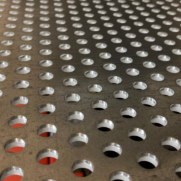
Forestry equipment sees some of the toughest conditions industrial equipment can face. It’s up against endless dust, wood chips, branches, mud, heat, and constant vibration. How do equipment manufacturers make it work? By implementing forestry equipment engineered with custom perforated metal panels.
Perforated panels give manufacturers and equipment operators a durable way to manage airflow, screen debris, and protect components. Even better, these panels can be custom-designed to meet exact specifications. From material and hole size to perforation pattern and open area, we help customers create custom panels for a range of forestry applications.
What Are the Benefits of Custom Perforated Metal Panels for Forestry Equipment?
Custom perforated metal panels help forestry equipment manufacturers balance airflow, debris screening, equipment protection, and structural performance. Manufacturers can select the metal, hole pattern, open area, thickness, and dimensions to match their specific operating requirements. This flexibility makes perforated metal useful for guards, ventilation panels, screens, grilles, and other equipment components.
How Do Perforated Metal Panels Improve Forestry Equipment Airflow?
Forestry equipment typically runs for 10-12 hours a day per shift. Some operations, however, run double shifts, totaling up to 20 hours per day. Engines, hydraulic systems, and other components generate a great deal of heat during these operating hours and need adequate ventilation to operate effectively.
Engineers can leverage perforated metal panels to encourage airflow through these enclosures, helping to keep forestry equipment online. Manufacturers can customize their perforation pattern to balance protection with ventilation. For example, increasing the open area promotes greater airflow, while smaller openings or different patterns provide more screening.
In our experience, customers see better results when they determine the panel’s primary job before choosing a perforation pattern. A ventilation panel, for instance, requires a different open area than a debris screen or protective equipment guard.
Why Use Custom Metal Screens for Forestry Equipment Debris Protection?
Airborne and moving debris come with the territory of forestry equipment. Wood chips, bark, leaves, and other materials can reach areas that manufacturers need to protect. Custom metal screens create a physical barrier to protect these areas, while also creating openings to maintain necessary airflow and visibility.
Rather than adapting an off-the-shelf screen to a machine, manufacturers can specify a perforation pattern that directly addresses the debris size they want to screen and the amount of open area they need. That makes perforated metal perfect for forestry applications like:
- Engine and equipment ventilation grilles
- Protective machine guards
- Debris screens
- Radiator and cooling-system screens
- Operator-area protective panels
- Equipment enclosures
- Intake and exhaust guards
How Does Custom Perforated Metal Support Heavy-Duty Forestry Equipment?
Forestry machines don’t spend their working lives in controlled indoor environments. Manufacturers need components that can handle demanding field conditions, and material selection is key.
At Roy Manufacturing, we work with a range of durable materials, including stainless steel, aluminum, mild steel, galvanized steel, and carbon steel. This variety allows manufacturers to choose the material that aligns with their specific equipment’s operating environment, weight requirements, and fabrication needs.
Material thickness also matters. Our team can manufacture perforated products from 22-gauge through ¼-inch thickness and process sheet sizes up to 80” x 192”. This gives OEMs flexibility for both smaller components and larger equipment panels.
What Perforation Patterns Work for Forestry Equipment Screens?
The right hole pattern depends on what the screen needs to do.
- Round perforations are a commonly used, versatile option for many industrial screens and ventilation applications. Manufacturers can specify different diameters and straight or staggered patterns.
- Slotted perforations use elongated openings and help designers address applications that call for a different combination of open area and screening characteristics.
- Square perforations provide maximum open area for airflow, sorting, or screening.
- Hexagonal perforations create a high open-area ratio while retaining structural integrity. This pattern is typically used for ventilation-oriented applications.
- Custom perforations give manufacturers even more freedom when standard hole configurations don’t match specialized forestry equipment design.
Why Does Open Area Matter in Forestry Equipment Ventilation Panels?
Open area is the percentage of a perforated panel that consists of openings rather than solid material. It directly affects how a panel performs in applications that depend on airflow, screening, or visibility.
More open area doesn’t necessarily mean better forestry equipment perforated panels. A panel with large openings might allow excellent airflow but fail to screen debris. Likewise, a panel with openings that are too restrictive could provide greater screening but reduce ventilation.
We recommend evaluating hole dimensions, spacing, pattern, and material together instead of treating each spec as a separate decision. The goal is to create the right balance for the actual operating environment.
How Can Custom Perforated Metal Reduce Compromises in Forestry Equipment Design?
Standard perforated sheets work well when their specs already match an application. Forestry equipment manufacturers, however, often need components with exact dimensions, mounting areas, formed sections, or specialized patterns.
With custom manufacturing, OEMs can design the perforated component around the machine instead of designing the machine around whatever panel happens to be available. Depending on the project, manufacturers can specify:
- Material type
- Material thickness
- Hole size and shape
- Hole spacing
- Perforation pattern
- Required open area
- Overall panel dimensions
- Blank or solid areas for mounting
- Formed panel configurations
- Additional fabrication requirements
What Information Do You Need for a Custom Equipment Panel?
Providing a few core specs gives the manufacturer a strong starting point for your custom perforated metal project. We recommend identifying:
- Hole size and spacing: Determine the opening dimensions and spacing needed for airflow, screening, or other functional requirements.
- Material type: Specify options such as mild steel, stainless steel, or aluminum based on the application.
- Material thickness: Choose a thickness that’s appropriate for both the panel’s structural and fabrication requirements.
- Quantity: Identify how many components the project requires.
- Drawings or plans: Provide available project drawings to help communicate dimensions, mounting details, and other requirements.
You don’t need to know every spec to start a project. Our team at Roy Manufacturing can discuss the application and recommend options based on the information you provide.
Frequently Asked Questions About Perforated Metal for Forestry Equipment
What metals can manufacturers use for forestry equipment panels?
Material options at Roy Manufacturing include stainless steel, aluminum, mild steel, galvanized steel, and carbon steel, among other materials. The appropriate choice depends on factors like the operating environment, fabrication requirements, weight, and desired performance.
Can perforated metal improve airflow in forestry machinery?
Yes. Perforations allow air to move through a panel while the remaining metal provides a physical barrier. Designers can adjust hole size, spacing, and pattern to achieve an open-area percentage appropriate for the equipment’s ventilation and protection requirements.
What specifications should I provide for a custom perforated panel?
Start with your desired hole size and spacing, material type, material thickness, and quantity. Drawings or plans can also help communicate your project’s requirements. Roy Manufacturing can recommend options when you haven’t finalized every specification.
Build Better Forestry Equipment With Roy Manufacturing
Forestry machinery demands components designed for real working conditions. Using custom perforated panels for forestry equipment gives OEMs a flexible, durable solution for airflow, debris screening, and equipment protection.
A perforated panel may look simple, but its performance hinges on several interconnected specifications. Hole dimensions, spacing, open area, material, and thickness all affect the finished product.
At Roy Manufacturing, we’ve supplied stock and custom perforated metal and materials for more than six decades from our shop in Portland, Oregon. We work with OEMs and forestry customers nationwide as part of the broad range of industries we serve.
We’ve found that early collaboration is key to a successful project. Customers can provide drawings, plans, and known specifications, or our team can help evaluate the best options to optimize a project. Whether you need a ventilation grille, debris screen, protective guard, or a completely custom component, contact us for a same-day quote.