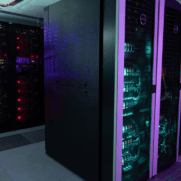
Data center enclosures house, secure, and cool critical IT equipment. Whether it’s a server cabinet, network cabinet, or colocation cage, perforated and solid panels directly affect the cooling efficiency, equipment protection, and long-term reliability of these enclosures. Both panel types solve different challenges, and understanding where each option functions best is key to optimizing a facility’s performance. Keep reading as we dive into when to use perforated vs solid panels in data center enclosures.
Should You Choose Perforated or Solid Panels for Data Center Enclosures?
Perforated panels work best when equipment requires unrestricted airflow for efficient cooling, while solid panels provide superior containment, physical protection, and controlled airflow management. Many modern data centers combine both panel types to optimize cooling performance, improve energy efficiency, and protect critical equipment.
How Does Panel Selection Affect Data Centers?
Servers generate tremendous amounts of heat. This means that cooling systems to remove all that heat are a top priority in every data center. Because these systems can account for up to 40% of a center’s energy consumption, facilities are continually looking for ways to improve cooling performance. For this reason, panel selection plays a big role in data center design.
Every component that improves airflow helps reduce operating costs and maintain ideal equipment temperatures. We’ve found that facilities that carefully balance airflow and containment see more consistent cooling performance, reducing the strain on their HVAC systems. This can be achieved by selecting enclosure panels that support the entire data center’s cooling strategy, instead of being thought of merely as a design decision.
What Are Perforated Panels?
Perforated panels have precisely engineered openings that allow air to pass through while maintaining the metal’s structural strength. The perforation pattern’s size, shape, spacing, and open area percentage all directly affect the airflow performance.
At Roy Manufacturing, we produce custom perforated metal panels that allow data center engineers to meet the needs of their specific application. Instead of relying on one-size-fits-all solutions, manufacturers can optimize panel designs for cooling efficiency, strength, appearance, and durability.
The benefits of using perforated panels for data center enclosures include:
- Consistent airflow through equipment racks
- Reduced heat buildup around servers
- Hot and cold aisle containment strategies
- Improved HVAC efficiency
- Maintaining structural rigidity while maximizing open area
- Custom airflow designs through tailored perforation patterns
How Perforated Panels Improve Data Center Cooling
The primary advantage of perforated panels is airflow. Unlike solid panels, perforated panels allow air to efficiently move through data center enclosures. Cool air can circulate through the server racks as hot exhaust exits without creating excessive back pressure.
Utilizing perforated panels helps maintain predictable airflow throughout the enclosure instead of forcing cooling systems to compensate for airflow restrictions. This improves equipment reliability and lowers cooling costs.
We recommend evaluating airflow requirements early in the enclosure design process. This helps engineers fine-tune performance based on rack density, equipment type, and cooling system design.
What Are Solid Panels?
Solid panels create a completely enclosed barrier that prevents air from passing directly through the enclosure. They don’t contribute to equipment ventilation, but they do play an important role in airflow containment, equipment protection, and physical security.
Many data centers install solid side panels to separate equipment from adjacent racks, reduce contamination, and direct conditioned air through designated pathways. Paired with front- and rear-airflow management strategies, solid panels help cooling systems operate more efficiently.
The benefits of solid panels for data center enclosures include:
- Improved physical security for sensitive equipment
- Hot and cold aisle containment systems
- Reduced dust and airborne contaminants entering enclosures
- Additional structural protection
- Clean, professional equipment installations
- Limiting unwanted airflow between adjacent racks
Perforated vs Solid Panels in Data Center Enclosures
Neither panel type serves every application. The best choice depends on airflow requirements, equipment density, cooling strategy, and environmental conditions.
| Feature | Perforated Panels | Solid Panels |
|---|---|---|
| Airflow | Excellent | Minimal |
| Cooling Performance | High | Depends on containment strategy |
| Equipment Protection | Very Good | Excellent |
| Dust Protection | Moderate | High |
| Containment | Limited | Excellent |
| Customization | Extensive perforation options | Simple solid surface |
When Should You Choose Perforated Panels?
When airflow is the highest priority, perforated panels are the best choice. High-density server racks, network equipment, storage arrays, and telecommunications hardware all generate significant heat that requires continuous cooling. Perforated front and rear enclosure doors let conditioned air move through equipment racks without unnecessary restrictions.
We’ve found that when a data center upgrades legacy enclosures, they often replace restrictive solid panels with perforated designs to improve cooling without having to replace the entire rack system.
When Are Solid Panels the Better Choice?
When airflow needs to be controlled, solid panels excel. In fact, side panels frequently use solid construction to isolate racks and prevent conditioned air from escaping into surrounding spaces.
Solid panels also work well to protect equipment from dust, debris, accidental contact, and harsh industrial environments. They help create cleaner installations and support overall airflow management through intentional cooling pathways.
Can You Combine Perforated and Solid Panels in Data Center Enclosures?
Absolutely. Many modern data centers employ both panel styles to maximize performance. A common configuration is perforated front and rear doors paired with solid side panels. This arrangement allows cool air to enter through the front, move efficiently across the servers, and exit through the rear.
Based on client results, hybrid enclosure designs often deliver the best balance of cooling efficiency, equipment protection, and energy savings. Instead of treating perforated and solid panels as competing options for data center enclosures, engineers often use both to achieve specific airflow objectives.
Why Custom Perforated Panels Deliver Better Results
Every data center operates with its own equipment density, rack configuration, cooling system, and operating environment. With custom perforated panels, manufacturers can meet their specific airflow demands by optimizing:
- Open-area percentage
- Hole diameter
- Hole spacing
- Perforation pattern
- Material thickness
- Overall panel dimensions
- Strength and rigidity
- Appearance and branding
At Roy Manufacturing, we produce precision perforated metal panels that meet demanding specifications for OEMs, enclosure manufacturers, and industrial applications. Our in-house capabilities allow customers to develop panel designs that balance airflow, durability, manufacturability, and aesthetics.
Frequently Asked Questions
Are perforated panels better than solid panels for data centers?
Perforated panels perform better when maximizing airflow and cooling efficiency is the priority. Solid panels work better for containment, equipment protection, and directing airflow through designated cooling paths.
What percentage of open area works best for data center perforated panels?
The ideal open-area percentage depends on rack density, server heat output, and the facility’s cooling design. Higher-density applications typically require greater airflow, making custom perforation patterns an effective solution.
Can perforated and solid panels be used together?
Yes. Many data centers use perforated front and rear panels with solid side panels to improve airflow while maintaining effective hot aisle and cold aisle containment.
Why choose custom perforated metal instead of stock panels?
Custom perforated panels allow engineers to optimize airflow, structural strength, hole patterns, material selection, and aesthetics for the specific requirements of each enclosure.
Choose the Right Panel for Your Data Center Enclosure with Roy Manufacturing
When comparing perforated vs solid panels in data center enclosures, the best solution comes down to your cooling strategy and operational goals. Perforated panels maximize airflow and support efficient thermal management, while solid panels improve containment, security, and equipment protection. Many facilities find that combining both panel types within the same enclosure design delivers the best results.
At Roy Manufacturing, we specialize in custom perforated metal solutions that help OEMs and enclosure manufacturers solve complex airflow challenges. Whether you need standard perforated panels or a fully engineered custom design, our team can help you develop a solution that balances airflow, strength, appearance, and manufacturability.
Contact us today for a same-day quote and see how our custom perforated panels can improve your data center’s cooling efficiency and equipment performance.