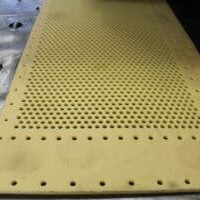
For seed processing precision screens, you need to consider your seed type, grading accuracy, and equipment specifications. Dealing with small grains, oilseeds, or specialty cover crops means the quality of your final product is inextricably linked to the precision of your cleaning and grading equipment.
At Roy Manufacturing, our roots are in seed cleaning and mill manufacturing. We understand that there’s little to no room for margin of error, just like we understand that a screen is the key to the purity of your product. Here are our tips on what to look for to keep your seed processing operation competitive and high-performing.
What Should I Look For in Precision Screens for Seed Processing?
Look for precision screens with consistent perforation size, durable materials, smooth finishes, and tight manufacturing tolerances. The right screen should match your seed type, desired grading accuracy, throughput needs, and equipment specifications while reducing damage, clogging, and contamination during processing.
The Right Perforation Patterns for Seed Varieties
Every seed has a unique geometry. That means a one-size-fits-all approach to precision screens for seed processing inevitably leads to waste or contamination. We recommend choosing the hole shape as your first step to optimizing the cleaning process for your specific operation.
- Round Perforations: Ideal for separating by width. These are industry-standard for cleaning round seeds like peas, soybeans, or corn.
- Slotted/Oblong Perforations: Essential for separating by thickness. These are especially effective for seed grains like wheat, oats, or barley – thin weed seeds and debris fall through, leaving the plump, high-value grain behind.
- Square Perforations: Often used for scalping (removing large debris from the seed stream) or for high-capacity flow where maximum open area is required.
High Open Area and Sizing Accuracy
In seed processing, “precision” refers to the consistency of the hole size across the entire screen. If a ⅛” hole fluctuates by even a few thousandths of an inch, you risk losing good seed or allowing splits and contaminants to pass through.
When evaluating precision screens for seed processing, look for manufacturers who use computer-controlled punch presses. At Roy Manufacturing, our CNC equipment ensures every perforation is uniform.
You also need to balance your screen’s hole size with the open area ratio. A higher open area percentage increases throughput and prevents bottlenecks, but it can’t come at the expense of the screen’s structural integrity. A precision-engineered screen provides the maximum possible open area while maintaining rigidity to withstand constant vibration.
Material Durability and Abrasion Resistance
Seed processing is an abrasive environment. Thousands of pounds of seeds passing over a metal surface every hour will eventually wear down the lands (the space between the holes). As these lands wear, the hole size effectively increases, compromising your grading accuracy.
For high-volume seed processing operations, precision screen material choice is paramount:
- Mild Steel: A cost-effective solution for standard applications.
- Stainless Steel: Necessary for food-grade processing or high-moisture environments requiring corrosion resistance.
- Polyurethane Sorting Screens: A modern alternative to traditional metal. These screens are exceptionally durable, provide superior abrasion resistance, reduce facility noise levels, and help resist blinding.
Clogging Prevention
We’ve seen just how quickly a blinded screen can halt productivity. This happens when seeds of a specific size become wedged in the perforations, blocking the flow of material.
To combat this, we recommend precision screens with optimized staggered row patterns. By staggering the holes, you ensure that the seed encounters more edge as it moves down the screen. This then increases the likelihood of a successful separation, and reduces the chances of a seed finding a place to lodge.
A smooth perforation with no burrs or sharp edges is also vital to prevent clogging. A clean, on-spec punch ensures that seeds glide over and through the holes without catching.
Customization and Fast Lead Times
Timing is everything. A broken seed processing precision screen during harvest can cost thousands of dollars in lost time. When choosing a screen provider, look for a partner who offers both custom capabilities and rapid fulfillment.
For example, your facility might need specific sheet sizes and unique gauges. Or you may need custom matrix patterns or specific hook strips for tensioning. At Roy Manufacturing, we can deliver custom-fabricated screens that meet your exact specs within five days of an order.
Vibration and Screen Flatness
For a screen to work effectively, the seed has to move across it in a uniform curtain. If a screen sheet is warped or has uneven tension, the seed will channel down one side. This leaves much of the screen surface unused and results in poor separation.
Precision screens for seed processing must be delivered perfectly flat and stay that way under the stress of high-frequency vibration. Look for screens that have been properly leveled and sheared to exact dimensions. This ensures a perfect fit in your cleaners, whether you’re using a Clipper, Crippen, or Cimbria-style machine.
Frequently Asked Questions
How often should I replace my screens?
It depends on the abrasiveness of the seed and the volume of your operations. You should inspect your screens for any rounding of the hole edges or thinning of the metal. Once the hole dimensions begin to stretch or wear beyond a few thousandths of an inch, your grading accuracy will drop, and it’s time for a replacement.
Can I get custom precision screen sizes for older seed processing machines?
Yes. Many legacy machines require unique dimensions or specific mounting hardware like hook strips. We can fabricate screens up to 80”x192” in various gauges and materials to fit almost any make or model of seed cleaner.
What materials offer the best longevity?
Mild steel is typically sufficient for standard grain cleaning. However, if you’re processing high-moisture seeds or working in a food-grade environment, we recommend stainless steel. For extreme high-volume operations, polyurethane screens provide the best abrasion resistance and can significantly reduce noise levels in the mill.
Invest in Quality for Long-Term Yield with Roy Manufacturing
Screens may seem like a simple component of your mill, but they’re actually the defining factor in your seed’s final grade. Investing in precision-engineered perforated metal ensures you’re maximizing your operation’s yield, while minimizing waste and delivering a product that meets the highest industry standards.
At Roy Manufacturing, we got our start with J.J. Ross Mill Finishing Co., a seed cleaning and mill manufacturing company. We understand the nuances of seed separation and pride ourselves on providing the agricultural industry with the most reliable, high-quality screens on the market. Contact us today for a same-day quote and put our 68 years of experience to work for you.