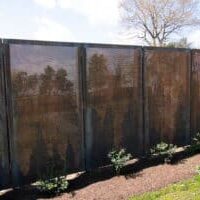
One of the biggest advantages of using perforated metal for privacy screens is that the designer can control the visibility. From parking garages and commercial fencing to architectural screens and equipment enclosures, every project has its own requirements for sightlines and airflow. Thanks to its versatility, perforated metal can easily meet these varying requirements. The question then becomes: how do you choose the right perforation patterns for your privacy screens?
At Roy Manufacturing, we’ve helped customers select custom perforated metal solutions for over six decades. We’ve found that effective privacy screens begin with a hole pattern that delivers the privacy your project demands while also maintaining airflow, durability, and visual appeal. Here’s how to choose.
What Is The Best Perforation Pattern for Privacy Screens?
The best perforation pattern for privacy screens depends on your project’s goals. Round holes provide a timeless appearance and balanced airflow, square holes create a modern architectural look, slotted patterns improve directional ventilation, and decorative perforations provide custom aesthetics while maintaining varying levels of privacy and light transmission.
How Do Perforation Patterns Affect Privacy Screens?
Privacy screens are rarely used solely to block sightlines. They’re also used to improve ventilation, reduce solar heat gain, increase security, and enhance building design. The perforation pattern for these screens affects:
- Privacy
- Airflow and ventilation
- Natural light
- Structural strength
- Weight
- Visual appearance
- Manufacturing efficiency
Because changing even one variable often influences several others, we recommend evaluating all of these factors before selecting a perforation pattern.
Are Round Hole Perforation Patterns Good for Privacy Screens?
Round holes are the most popular perforation pattern for privacy screens. They’re known for their versatility and work well in commercial buildings, parking garages, industrial facilities, schools, and public spaces.
Round perforations create a clean, symmetrical appearance and allow for consistent airflow. Manufacturers can also produce round-hole patterns efficiently, which makes them a cost-effective solution for many projects.
Other benefits of round hole perforations include:
- Balanced privacy and ventilation
- Excellent structural strength
- Wide range of open-area percentages
- Clean architectural appearance
By simply adjusting the hole diameter and spacing, designers can increase the privacy of their screen while still maintaining airflow.
Are Square Hole Patterns Better for Modern Privacy Screens?
Square hole perforations create bold, contemporary lines that many architects favor for commercial buildings. The square openings provide excellent airflow like round holes do, but they create a different visual effect. Square perforations enhance:
- Office buildings
- Mixed-use developments
- Educational facilities
- Transit stations
- Public gathering spaces
With their straight edges, square perforations often become a design feature in privacy screens.
Do Slotted Perforation Patterns Improve Airflow?
Some privacy screens need to provide maximum ventilation while still limiting visibility. In our experience, slotted perforations provide the ideal solution for these projects.
Horizontal slots, vertical slots, and staggered slot patterns work to direct airflow differently depending on a project’s requirements. These perforation patterns work especially well for privacy screens that also need to provide cooling and equipment protection. We’ve found that these options are particularly beneficial for mechanical equipment enclosures, HVAC screening, and utility areas.
How Can Decorative Perforation Patterns Create Architectural Impact?
In 2026, privacy screens no longer look purely functional. Instead, designers are using decorative perforation patterns to transform metal panels into architectural focal points. Custom geometric designs, abstract shapes, logos, and artistic patterns allow designers to provide required privacy screens while also reinforcing branding.
In our experience, decorative perforation patterns work particularly well for:
- Corporate headquarters
- Hotels
- Public art installations
- Retail developments
- Outdoor gathering spaces
How Does Open Area Affect Privacy?
Open area is the percentage of material that’s removed during perforation. It directly affects a privacy screen’s visibility and airflow. Generally:
- Lower open area increases privacy.
- Higher open area improves airflow.
- Smaller holes limit visibility more effectively than larger holes with the same open-area percentage.
- Viewing angle changes perceived privacy.
Based on client results, an open area percentage of 20% to 40% strikes the perfect balance for privacy screens. This allows for ample ventilation without exposing what’s behind the screen.
How Does Material Selection Affect Privacy Screens?
Choosing perforation patterns is only one part of designing privacy screens. Material selection also plays a role in their effectiveness. Common choices include:
- Carbon steel
- Galvanized steel
- Aluminum
- Stainless steel
Each material has different advantages for factors like environmental exposure, corrosion resistance, weight requirements, and budget. At Roy Manufacturing, we help customers optimize their material and perforation pattern selections for their intended application.
How Do You Choose the Right Perforation Pattern for Privacy Screens?
To choose the right perforation pattern for privacy screens, start by identifying your project’s primary objective. Then balance appearance with performance.
We recommend following these steps:
- Determine your desired privacy level.
- Calculate required airflow.
- Consider lighting conditions.
- Evaluate structural requirements.
- Select the appropriate material.
- Choose a perforation pattern that supports both performance and design goals.
- Review custom options if standard patterns don’t meet your project’s requirements.
You can often save time and avoid costly revisions by working with an experienced perforated metal manufacturer early in the design process.
Frequently Asked Questions
What perforation pattern provides the most privacy?
Patterns with smaller holes and lower open-area percentages generally provide the highest level of privacy while still allowing airflow.
Can decorative perforated metal still provide privacy?
Yes. Decorative perforation patterns can combine attractive designs with effective privacy by carefully controlling hole size, spacing, and open area.
What material works best for outdoor privacy screens?
Aluminum, galvanized steel, and stainless steel all perform well outdoors. The ideal choice depends on environmental conditions, corrosion exposure, structural requirements, and budget.
Why Choose Roy Manufacturing for Custom Privacy Screen Perforations?
Every project brings its own unique set of challenges. While standard perforation patterns work well for many applications, custom designs often deliver better results when you have specific performance goals.
At Roy Manufacturing, we produce high-quality perforated metal solutions that meet the demands of industries throughout North America. Our customizable precision-perforated products are manufactured under strict quality standards using advanced equipment.
From traditional round holes to directional slots, we’ll help you choose the right perforation patterns for your privacy screens. Contact us today for a free same-day quote.