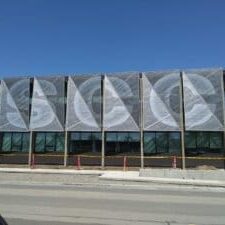
Sustainability becomes more of a priority every day – especially in architecture and industrial design. One of the most effective ways to meet this demand for energy efficiency in modern buildings is through the strategic use of perforated metal facades.
With perforated metal, architects and designers can balance aesthetic appeal with the high-performance functionality the industry demands. At Roy Manufacturing, we’ve seen firsthand how these facades can transform a building’s thermal performance and environmental footprint.
How Do Perforated Metal Facades Improve Energy Efficiency?
Perforated metal facades improve energy efficiency by acting as a building’s passive cooling system. It blocks direct infrared radiation to reduce solar gain and cooling loads while still allowing natural daylight. Additionally, the open area of the perforations promotes natural ventilation, reducing reliance on the HVAC system and lowering overall carbon emissions.
Solar Shading and Reducing Heat Gain with Perforated Metal
The primary driver of commercial building energy consumption is the HVAC system, specifically during peak cooling months. When sunlight hits a glass-heavy building, it creates a greenhouse effect that traps heat inside and forces air conditioning units to work overtime. In our experience, custom-engineered perforated metal facades act as physical barriers that intercept this solar radiation.
By adjusting the open area percentage (the ratio of holes to solid metal), our team can help architects dial in the exact amount of shading required for a specific climate. For example, a facade with a smaller open area on a southern exposure can block a significant amount of thermal energy, keeping the interior temperature stable without sacrificing the building’s visual transparency. This passive cooling strategy is a linchpin in LEED-certified projects across North America.
Optimizing Natural Ventilation and Airflow
Keeping heat out is only one part of building energy efficiency – you also have to move air efficiently. Perforated metal facades are uniquely suited to optimize energy efficiency in this way. Unlike solid cladding, they create breathable building skins that enable natural convection. As air passes through the perforations, it helps dissipate heat that would otherwise be trapped against the building’s exterior walls.
This is particularly effective in parking garages and industrial facilities. For example, using perforated metal for parking garage ventilation provides the necessary airflow to meet exhaust dissipation safety codes while also protecting the garage’s interior from wind and rain. This reduces the need for expensive, energy-hungry mechanical fans and ventilation equipment.
Daylighting: Balancing Light and Thermal Comfort
Artificial lighting is another major energy drain on commercial buildings. A common mistake in energy-efficient design is over-shading, which forces occupants to turn on lights even when it’s the middle of the day. Perforated metal facades solve this problem by optimizing daylighting. The holes in the metal panels act as thousands of tiny apertures, diffusing harsh direct sunlight into soft, ambient light.
This filtered-light effect reduces glare on computer screens and work surfaces, while also minimizing reliance on electric lighting. Our team recommends analyzing the hole pattern and pitch to maximize light penetration while still meeting the primary goal of thermal insulation. It’s a delicate balance, but one that results in a significant reduction in energy consumption over a building’s lifetime.
Durability and Sustainability in Material Choice
A building’s energy efficiency also includes its embodied energy. This refers to the energy required to produce, transport, and install materials. At Roy Manufacturing, we prioritize materials like aluminum and stainless steel, which are highly recyclable and known for their long lifespans. A perforated metal facade can last for decades with minimal maintenance, meaning the energy investment in the materials pays dividends over the structure’s lifetime.
The lightweight nature of perforated metal facades also makes them a great choice for boosting a building’s energy efficiency. They require less structural support than solid stone or thick glass cladding. This reduces the amount of steel and concrete needed for the building’s frame, further lowering the construction process’s total environmental impact.
Custom Solutions for Specialized Industrial Needs
While architectural facades get a lot of attention, the same sustainability principles apply to industrial equipment screens and HVAC enclosures. We produce custom perforated products to meet the unique needs of grain millers, food processors, and original equipment manufacturers (OEMs). By using perforated metal to protect sensitive machinery, these businesses can ensure proper airflow and cooling, preventing equipment overheating and wasted energy caused by inefficient machinery.
Frequently Asked Questions
What is the best material for an energy-efficient exterior facade?
Aluminum is typically the preferred choice for energy-efficient building facades. It’s lightweight, naturally corrosion-resistant, and highly reflective, which helps bounce solar heat away from the building. Stainless steel is also an excellent option to meet high-durability requirements.
Can perforated metal help with LEED certification?
Yes! Perforated metal contributes to LEED credits in several categories, including Energy and Atmosphere, Indoor Environmental Quality, and Materials and Resources.
How do I choose the right hole size for solar shading?
The choice depends on your building’s orientation and local climate. Generally, a 30% to 50% open area provides a good balance between visibility and heat reduction. Our team can help you evaluate standard and custom hole styles to match your specific performance criteria.
Ready to Put Perforated Metal to Work for Your Building’s Energy Efficiency?
If you’re looking to integrate high-quality, precision-engineered perforated metal into your next project, our team is here to help. From architects and general contractors to business operators, Roy Manufacturing provides the expertise and craftsmanship to effectively hit energy goals across industries. Contact us today for a same-day quote.