Perforated materials are prevalent in architecture, OEM, Agricultural, and Fisheries as they offer aesthetic and functional benefits. Perforated materials are characterized by tiny holes or perforations arranged in a specific pattern on the material’s surface. These holes allow light, air, and sound to pass through, creating a unique visual effect and providing functional advantages for […]

Understanding Laser Cutting Tolerances: What Engineers, Designers, and Buyers Need to Know
Laser cutting provides exceptional accuracy, but no manufacturing process produces dimensions with absolute mathematical perfection. When a metal component needs to fit, align, or be assembled, understanding laser cutting tolerances helps create realistic specifications for that part. Keep reading to see how material type, thickness, geometry, equipment, downstream fabrication, and other variables all affect tolerances, […]
How Do I Specify Perforated Metal for My Project?
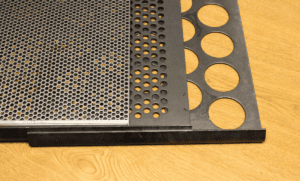
What’s the difference between a component that performs exactly as it should vs. one that causes costly design or production problems? Often, it’s simply knowing how to specify perforated metal. Hole size, centers, material gauge, open area, and sheet size all factor into how a perforated sheet looks, performs, and fits into your finished assembly. […]
How to Prepare a Metal Fabrication RFQ
What’s the difference between receiving a useful, accurate quote and spending days answering follow-up questions? A clear metal fabrication RFQ. When you give your fabrication partner your complete specifications from the start, they can accurately determine the right materials, processes, tolerances, finishing requirements, and delivery expectations for your project. It can also help reduce unpleasant […]

How Do You Calculate Open Area for Perforated Metal?
Open area affects everything from airflow and visibility to material flow and structural performance. Understanding how to correctly calculate the open area for perforated metal helps you choose a perforation pattern that performs how you need it to. Keep reading as we explain what open area is and how to determine the exact percentage for […]
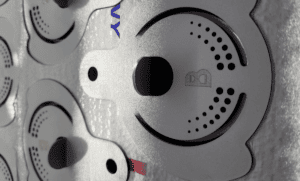
What Is Sheet Metal Fabrication?
Look around any building, factory, data center, or commercial space, and you’ll see sheet metal fabrication at work. Flat sheets of metal can be transformed into parts and components like vents, privacy screens, or server rack doors through processes like cutting, punching, shearing, forming, rolling, and welding. It may sound simple enough, but proper metal […]
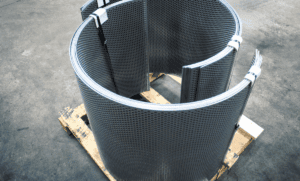
When to Use Special Alloys in Fabrication
Turbine shafts, heat exchangers, and curved panels aren’t your typical metal fabrication projects. High-spec applications like these involve complex engineering, tight tolerances, and special alloys for fabrication. For engineers, OEMs, architects, and other high-spec buyers, a non-standard fabrication material is often necessary to achieve the right combination of strength, corrosion resistance, weight, appearance, and thermal […]
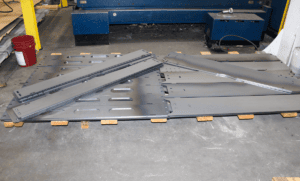
Laser Cutting Design Guidelines for Better Metal Parts
All manufacturers want to move a project from design to production more efficiently, and following some basic guidelines for laser cutting design is the best way to do that. When designers hand over a CAD file that accounts for their project’s material type, thickness, geometry, and downstream fabrication requirements, they’re much less likely to run into […]
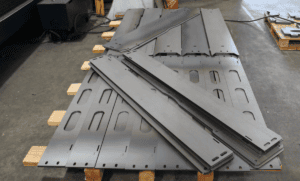
How Profile Laser Helps You Move from Prototype to Production
To take a product from idea to reality, you need more than just a quality design. You need a manufacturing partner that understands every stage of the process – from the first prototype all the way to full-scale production. Whether you’re developing a new product, replacing a hard-to-find component, or preparing for a large production […]
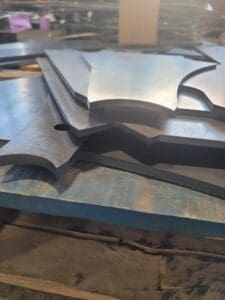
How Metal Fabrication Streamlines Complex Assemblies
Complex assemblies demand precision, consistency, and efficient production. Whether it’s avionics systems, diagnostic imaging equipment, or custom heavy machinery lines, every component must fit together perfectly. At Profile Laser, we’ve seen how metal fabrication meets these exacting demands, and how it streamlines complex assemblies. A full-service fabrication partner simplifies the entire process by managing every […]
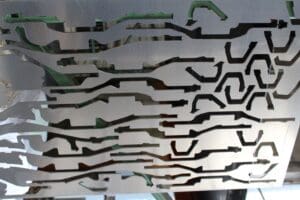
Why Use Precision Forming to Shape Custom Components
For some industries, extremely tight tolerances, exact specifications, or demanding applications mean stock components are not an option. In these instances, engineers turn to precision forming to shape custom components for their projects. At Profile Laser, precision forming complements our advanced laser cutting capabilities to turn design concepts into finished parts with exceptional accuracy and […]