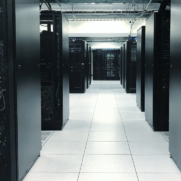
Modern servers discharge air that can reach anywhere between 95°F and 130°F. These servers are designed to safely handle this warm air, assuming a data center can pump enough air over the hardware. That’s where perforated metal comes in. Implementing perforated metal in data centers allows for efficient airflow, providing the reliable, long-term operational solution facility managers need to protect valuable equipment.
How Does Perforated Metal Improve Data Center Performance?
Perforated metal improves data center performance by increasing airflow, supporting efficient cooling, protecting critical equipment, and enabling customizable infrastructure designs. Its open-area patterns allow air to circulate where it’s needed most, helping reduce hot spots while maintaining structural strength and long-term durability throughout the facility.
Why Airflow Management Matters in Modern Data Centers
Servers, storage systems, and networking equipment all generate a considerable amount of heat in data centers. Without proper airflow management, the facility’s temperature can quickly rise, jeopardizing equipment reliability, performance, and uptime.
Perforated metal helps solve this problem by promoting effective airflow in data centers. Engineers can customize hole patterns and open-area percentages so conditioned air can move freely through server rooms, equipment enclosures, containment systems, and raised-floor environments.
In our experience, facilities that optimize airflow see more consistent cooling performance, reducing the strain on their HVAC systems. Better airflow distribution leads to stable temperatures and equipment performance.
Perforated Metal Cooling Solutions for Data Centers
Perforated metal cooling solutions help direct airflow to areas that need it the most. This, in turn, improves the facility’s thermal management, lowering operating costs and increasing equipment life. Common data center applications include:
- Server rack doors
- Hot aisle and cold aisle containment systems
- Equipment enclosures
- Air distribution panels
- Raised floor ventilation systems
- Mechanical room components
Perforated metal’s open design allows cooling systems to perform more effectively while also maintaining the strength required for demanding environments. As server densities increase, perforated components help facilities adapt to evolving cooling needs.
How Perforated Metal Protects Critical Data Center Equipment
Data centers need airflow, but they also need durable physical protection for valuable infrastructure. Perforated metal delivers on both fronts. The material protects equipment from accidental contact while still allowing technicians to inspect systems and maintain proper airflow. Perforated panels can serve as:
- Protective server rack doors
- Equipment guards
- Security partitions
- Mechanical equipment enclosures
- Cable management system components
Perforated metal’s strength helps data centers uphold security standards without sacrificing thermal performance.
Custom Perforated Metal Infrastructure for Data Centers
Every data center operates under different requirements. Power demands, cooling strategies, equipment configurations, and facility layouts vary from one project to another. Custom perforated metal solutions meet these various demands.
With perforated metal, designers and operators can create infrastructure that matches their exact project specifications. Manufacturers can produce components with customized:
- Hole patterns
- Open-area percentages
- Material types
- Panel sizes
- Thicknesses
- Finishes
- Fabricated assemblies
This flexibility lets engineers optimize airflow while meeting their unique structural and aesthetic requirements. We’ve found that customized perforated solutions help facilities maximize performance without compromising on design.
Benefits of Perforated Metal for High-Density Data Centers
As computing demands increase, high-density data centers require infrastructure capable of handling high thermal loads. Perforated metal supports this demand through:
- Improved airflow management
- Enhanced cooling efficiency
- Reduced hot spots
- Equipment protection
- Long service life
- Design flexibility
- Scalable infrastructure support
- Professional appearance
These advantages make perforated metal a practical solution for both new construction projects and existing facility upgrades.
Why Roy Manufacturing Is Your Full-Service Data Center Solution
At Roy Manufacturing, we support data center projects from concept through completion with our in-house manufacturing capabilities, engineering expertise, custom fabrication, and quality-focused production processes. This comprehensive approach helps our customers streamline complex projects.
Whether your data center needs custom airflow panels, server enclosure components, protective barriers, or specialized infrastructure solutions, we have the experience and capabilities to support your project with perforating, fabrication, and finishing all under one roof. Contact us today for a same-day quote.
Frequently Asked Questions
What is perforated metal used for in data centers?
Perforated metal is commonly used for server rack doors, airflow panels, containment systems, equipment enclosures, security partitions, and ventilation components that support cooling and equipment protection.
How does perforated metal improve airflow in data centers?
Perforated metal allows conditioned air to move through infrastructure while maintaining structural integrity. This helps cooling systems distribute air more effectively and reduce hot spots.
Can perforated metal be customized for data center applications?
Yes. Manufacturers can customize hole patterns, open-area percentages, materials, thicknesses, panel dimensions, and finishes to meet specific performance requirements.
Why do data centers use perforated server rack doors?
Perforated server rack doors improve ventilation while protecting equipment. They help maintain proper airflow through server racks without restricting cooling performance.