Profile Laser Knowledge Base
Oregon architects and builders rely on durable, aesthetically pleasing precision components for countless projects. Partnering with the right fabrication partner to produce those components makes all the difference in how smoothly those projects move from concept to completion. At Profile Laser, our team has delivered accurate, consistent, and practical architectural metal fabrication solutions for Oregon and beyond for decades.
Why Do Oregon Architects and Builders Partner With Profile Laser?
Oregon architects and builders partner with Profile Laser for precision laser cutting, custom metal fabrication, and support for specialized construction projects. Professional metal fabrication helps design and construction teams create accurate components, accommodate specific architectural requirements, and maintain consistency across production runs. These capabilities support applications ranging from decorative metal features to functional building components.
How Does Precision Laser Cutting Improve Architectural Metal Fabrication?
Precision laser cutting helps architects and contractors meet the exact requirements for their project’s shape, dimension, and pattern. This is key for architectural projects because even small dimensional differences can cause issues when multiple components need to fit together or align with existing structures.
By leveraging precision laser cutting, Oregon architects and builders gain several advantages.
- Accurate dimensions: Laser cutting helps components meet project specifications and fit within planned assemblies.
- Consistent results: CAD software supports uniform parts across production runs.
- Complex design capabilities: Laser technology accommodates detailed patterns, curves, slots, and custom shapes.
- Efficient material use: Strategic part layouts reduce scrap and improve material utilization.
- Greater design flexibility: Architects can design distinctive metal features instead of being boxed into standard shapes and sizes.
What Custom Architectural Metal Fabrication Solutions Do Oregon Architects Need?
Every architectural project has its own set of design demands. A commercial building, for example, may need custom ventilation panels, while a residential development may incorporate decorative metal accents or specialized mounting components. Custom metal fabrication gives architects greater control over these elements.
Decorative Metal Panels and Architectural Features
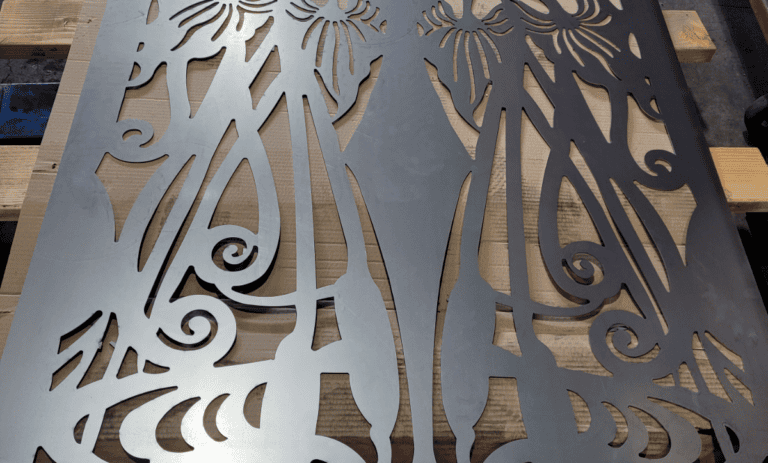
Metal panels can turn an ordinary surface into a distinctive architectural feature. Architects use precision laser cutting to incorporate geometric patterns, unique cutouts, and other details into facades, interior spaces, and decorative installations.
Custom Metal Components for Commercial Construction
Commercial construction often requires specialized parts like mounting plates, brackets, equipment panels, and other precision-cut components that support building systems or architectural assemblies. Contractors can use custom fabrication to create parts that meet their project’s requirements, instead of modifying off-the-shelf products to make them fit.
Metal Components for Renovations and Remodels
Renovation projects come with more than their fair share of challenges, like unusual dimensions, discontinued components, or architectural details that necessitate custom replacements. Precision laser cutting is a practical way to reproduce or create new components that fit already existing conditions. We’ve found that this type of architectural metal fabrication is especially valuable for Oregon contractors working on commercial renovations or custom residential upgrades.
How Does Custom Laser Cutting Support Architectural Design Freedom?
Architects want the freedom to explore creative ideas while maintaining functionality. Custom laser cutting makes that possible by accommodating designs that traditional cutting methods struggle to efficiently produce.
For example, an architect might envision a decorative metal screen with repeating geometric shapes. Another project might call for a series of custom brackets with precise mounting locations. Both of these applications are possible thanks to the way laser cutting translates digital design files into precisely cut metal components.
Why Does Local Oregon Metal Fabrication Matter for Construction Projects?
Construction projects run on tight schedules that leave little to no room for unexpected setbacks. That means architects and builders need reliable communication, clear specifications, and practical solutions when project requirements change.
Partnering with a metal fabricator local to the Pacific Northwest, like Profile Laser, can make coordinating project changes easier, especially when those revisions require custom components.
- Direct communication: Project teams can discuss drawings, specifications, and design adjustments with their fabrication partner.
- Regional familiarity: Oregon fabricators understand the unique needs of businesses and contractors in the Pacific Northwest.
- Collaborative problem-solving: Designers and fabricators can address manufacturability questions before they disrupt production.
- Flexible project coordination: Local relationships can simplify conversations about quantities, deadlines, and delivery.
How Can Architectural Metal Fabrication Help Reduce Construction Delays?
In our experience, most construction delays start long before crews arrive at the jobsite. Incomplete specifications, inaccurate dimensions, and unexpected fabrication challenges often create problems that ripple through an entire project.
Precision metal fabrication helps avoid these challenges thanks to accurate design information and consistent production. Architects and builders can further improve the process by taking some practical steps.
- Provide detailed drawings. Include dimensions, material requirements, tolerances, and relevant assembly information.
- Identify critical features. Highlight mounting holes, connection points, and dimensions that directly affect installation.
- Confirm material specifications. Select appropriate metals and thicknesses for the component’s intended function.
- Review fabrication requirements early. Discuss complex geometries, tight tolerances, and potential design adjustments before production.
- Coordinate production schedules. Share projected quantities and project deadlines so the fabrication team can evaluate timing and capacity.
What Should Architects Consider When Choosing Materials for Custom Metal Components?
Material selection plays a major role in architectural performance. The right choice always depends on the component’s intended use, environmental exposure, structural requirements, and desired appearance. However, in our experience, materials commonly used for architectural metal fabrication are:
- Aluminum: Its relatively low weight and corrosion resistance make aluminum useful for numerous decorative and nonstructural architectural components.
- Stainless steel: Its corrosion resistance and durability make it a strong option for applications that require long-term performance and an attractive finish.
- Carbon steel: Its strength and versatility make it useful for countless construction-related components, although outdoor applications typically require corrosion protection.
Material thickness also plays an important role in a component’s performance. It affects a part’s strength, weight, fabrication requirements, and overall cost.
We recommend considering the component’s intended function when evaluating material choices instead of selecting a metal solely based on appearance or the initial cost. For example, architects should take moisture exposure, environmental conditions, and protective finishes into consideration for outdoor applications in Oregon. Likewise, coastal environments may need additional corrosion resistance due to salt exposure.
How Does Profile Laser Support Custom Architectural Metal Projects?
Architects may prioritize appearance, pattern accuracy, and material selection. Contractors may focus on fit, installation requirements, and production schedules. But both need a fabrication partner who understands how these priorities work together.
At Profile Laser, our team brings precision laser-cutting and metal-fabrication expertise to projects that demand specialized components. Our approach covers multiple priorities.
- Precision: Producing components that meet detailed project specifications.
- Customization: Supporting unique designs and specialized fabrication requirements.
- Consistency: Helping teams maintain uniformity when projects require multiple matching parts.
- Collaboration: Reviewing project details to determine practical fabrication solutions.
- Quality: Focusing on accurate workmanship and dependable components.
Partner With Profile Laser for Oregon Architectural Metal Fabrication
Oregon architects and builders need a fabrication partner that understands just how crucial precision, customization, and dependable project coordination really are. Profile Laser is that partner.
We’ve helped bridge the gap between creative design and practical fabrication from our shop in Portland, Oregon, for customers nationwide for decades. Contact us today for a same-day quote, and let’s see how our precision laser cutting and custom metal fabrication services can support your next construction project.
Frequently Asked Questions
What architectural metal fabrication services does Profile Laser offer?
Profile Laser provides precision laser cutting and custom metal fabrication services for architectural and construction applications. These capabilities support decorative metal panels, custom brackets, mounting plates, equipment panels, and other specialized components. Architects and builders can use these services to create metal parts that meet their specific design and installation requirements.
Why should Oregon architects choose laser cutting for custom metal designs?
Precision laser cutting allows Oregon architects to create intricate patterns, detailed shapes, and accurately sized metal components. The technology delivers consistent results across production runs and supports greater design flexibility. Architects can use laser cutting for decorative features, functional building components, and specialized architectural details.
What metals work best for architectural laser cutting?
Aluminum, stainless steel, and carbon steel provide different advantages for architectural metal fabrication. Aluminum provides lightweight construction and corrosion resistance. Stainless steel offers durability and an aesthetic appeal, while carbon steel delivers strength and versatility. The best choice depends on the project’s design, structural requirements, environmental exposure, and budget.
Can Profile Laser create custom metal components for commercial construction projects?
Yes. Profile Laser supports commercial construction projects that call for custom laser-cut metal components. Applications include mounting brackets, equipment panels, decorative architectural elements, and specialized parts.
What information should architects provide when requesting a custom metal fabrication quote?
Architects should provide detailed drawings, material specifications, metal thickness, required quantities, tolerances, and anticipated project deadlines. They should also identify critical dimensions, mounting locations, and finishing requirements. Complete project information helps Profile Laser evaluate fabrication needs and develop an accurate quote.