Roy Mfg Knowledge Base
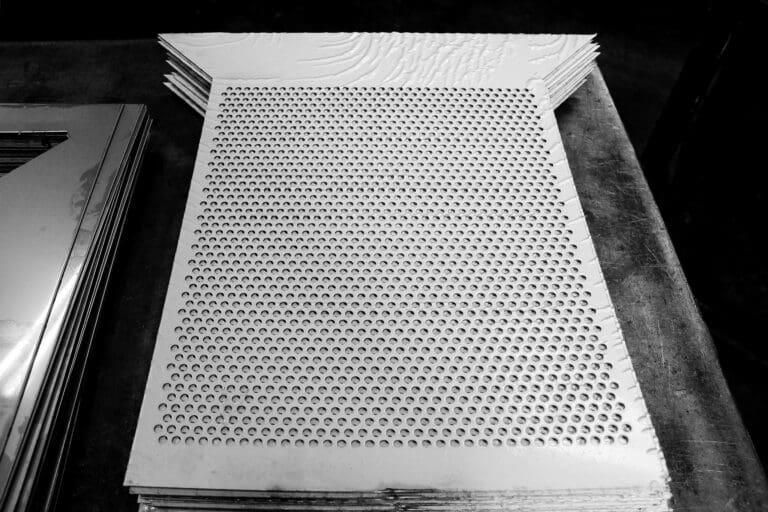
Industrial filters are essential components in many industries, from HVAC systems to chemical processing plants, ensuring that dust, debris, and other unwanted particles are kept out of critical systems. The choice of material used in these filters plays a vital role in their performance and longevity. Perforated metals are a popular option for industrial filters because they provide durability, strength, and efficiency in various industrial applications. If you’re tasked with procuring parts, you may wonder what makes the best metal for industrial filters to meet your company’s needs.
At Roy Manufacturing, we’ve been helping industries design and implement the right perforated metal solutions for over 60 years. The key to identifying the best perforated metal for industrial filters lies in understanding the environment, the system’s specific demands, and the characteristics of different types of perforated metals.
1. Stainless Steel: The Gold Standard for Industrial Filters
Stainless steel is one of the most versatile and popular metals for industrial filters. It offers a range of benefits that make it ideal for heavy-duty filtration systems. In environments where filters are exposed to moisture, chemicals, or high temperatures, stainless steel truly shines.
Key Benefits of Stainless Steel:
- Corrosion Resistance: Stainless steel is highly resistant to rust and corrosion, even in harsh environments with moisture or chemicals. This characteristic ensures long-lasting durability, making it suitable for industries like chemical processing, marine, and food and beverage manufacturing.
- Strength and Durability: Stainless steel can withstand high-stress environments without bending, breaking, or warping, even under heavy airflow or exposure to debris.
- Heat Resistance: For filters exposed to high-temperature conditions, stainless steel is a reliable option to maintain strength and structure.
Grades of Stainless Steel to Consider:
- Grade 304 Stainless Steel: This is one of the most commonly used grades, offering excellent corrosion resistance and durability. It is often used in applications where filters are exposed to air and water.
- Grade 316 Stainless Steel: Due to its increased resistance to corrosion, 316 stainless steel is superior for environments exposed to corrosive substances like salts or chemicals.
At Roy Manufacturing, we recommend stainless steel filters for clients needing longevity and reliability in corrosive or high-temperature environments. The material’s durability makes it well-suited for use in industries ranging from petrochemical plants to food processing.
2. Aluminum: Lightweight and Corrosion-Resistant
Aluminum is another strong contender for industrial filters, especially when weight is a consideration. Its lightweight nature makes it easy to install and handle, while its natural resistance to corrosion ensures a long service life, even in wet or humid environments.
Key Benefits of Aluminum:
- Corrosion Resistance: Like stainless steel, aluminum resists rust and corrosion, making it suitable for environments with high moisture content.
- Lightweight: Aluminum’s lower density makes it easier to install, transport, and maintain, particularly in applications where weight reduction is crucial.
- Ease of Maintenance: Aluminum filters are easy to clean and maintain, reducing downtime for cleaning and replacement.
Aluminum is frequently used in industries like HVAC systems, automotive applications, and aerospace, where a combination of durability and lightweight material is essential. For clients in these sectors, Roy Manufacturing can custom-design aluminum perforated metal filters that meet specific airflow and filtration needs.
3. Galvanized Steel: A Cost-Effective Option
Galvanized steel is a more affordable option for those who need the strength of steel but in environments where corrosion is not a major concern. The steel is coated with a layer of zinc, which protects it from rusting. While not as resistant to corrosive elements as stainless steel, it can still provide a reliable solution for certain applications.
Key Benefits of Galvanized Steel:
- Cost-Effective: Galvanized steel is a more affordable option than stainless steel, making it ideal for projects with tighter budgets.
- Strength: It retains much of the strength of steel, making it a durable option for filters that must handle high volumes of airflow and debris.
- Moderate Corrosion Resistance: The zinc coating helps prevent rust in environments that are not extremely harsh, such as indoor air filtration systems.
For industries where the budget is a significant factor, Roy Manufacturing often recommends galvanized steel filters, particularly in applications with limited exposure to moisture or chemicals.
4. Carbon Steel: Strength on a Budget
Carbon steel is another strong option when cost is a significant consideration. It’s durable and strong but doesn’t offer the same level of corrosion resistance as stainless steel or aluminum unless it is coated or treated. Therefore, carbon steel is typically used in dry or non-corrosive environments.
Key Benefits of Carbon Steel:
- High Strength: Carbon steel is exceptionally strong, making it ideal for heavy-duty applications where strength is essential.
- Affordable: Carbon steel offers a cost-effective solution for industries that don’t require the same level of corrosion resistance as stainless steel.
- Customization: It can be coated or treated for enhanced performance in environments where some corrosion resistance is needed.
Carbon steel can be a practical option for clients who need a strong material but don’t expect their filters to be exposed to harsh environments. Roy Manufacturing provides customized carbon steel perforated filters for projects where strength is the primary concern.
Key Characteristics to Consider for Perforated Metal Filters
When selecting a perforated metal for industrial filters, it’s not just about the type of metal. The specific characteristics of the metal must align with the environment’s demands and the filter’s function. Here are some critical factors to consider:
Corrosion Resistance
Industrial filters are often exposed to moisture, chemicals, or other corrosive elements. Metals like stainless steel and aluminum offer excellent corrosion resistance, ensuring long-lasting performance in harsh environments. This feature is essential in industries like chemical processing or food production, where exposure to liquids and other corrosive agents is constant.
Strength and Durability
The strength of the metal is crucial for maintaining the structural integrity of the filter under constant airflow and exposure to dust, debris, and other particles. Stainless and carbon steel are renowned for their strength, making them suitable for filters that endure heavy loads or rough conditions.
Open Area Percentage
The percentage of open area—the amount of space that allows air or liquids to pass through—determines the filter’s efficiency. A higher open area provides better airflow but may sacrifice the ability to filter finer particles. The right balance between open area and filtering capability ensures the filter performs effectively for the intended application.
Ease of Maintenance
Regular cleaning and maintenance are crucial to ensure the long-term efficiency of industrial filters. Stainless steel and aluminum are often easier to clean and maintain, preventing build-up from dust and debris. At Roy Manufacturing, we work with clients to design perforated metal filters that are efficient and easy to maintain for optimal performance.
Temperature Resistance
Some industrial filters are exposed to extreme temperatures. Metals like stainless steel can maintain their structural integrity and strength in high-temperature environments, making them ideal for industries such as manufacturing, petrochemical, and energy production.
Customization for Specific Applications
At Roy Manufacturing, we understand that each industrial application has unique requirements. That’s why we offer a range of customization options, from selecting the correct perforation pattern and open area percentage to choosing the best metal for the job. Whether you need round holes for general-purpose filters or custom shapes to suit specialized applications, our team is ready to collaborate with you to create the perfect solution.
Roy Manufacturing is Your Trusted Expert for Perforated Metal Filters
Choosing the right perforated metal for industrial filters is essential to ensuring the longevity and efficiency of your filtration system. Whether you need the corrosion resistance of stainless steel, the lightweight advantages of aluminum, or the cost-effective strength of galvanized or carbon steel, Roy Manufacturing has the experience and expertise to deliver the ideal solution for your company.
Our team is here to help you evaluate your needs, customize the right perforation pattern, and select the best metal for your filters. Contact Roy Manufacturing today to learn more about our high-quality perforated metal solutions for industrial filters.