Roy Mfg Knowledge Base
When it comes to choosing galvanized vs carbon steel, the question isn’t really which is better – it’s what are you using it for? The material you select directly impacts the equipment lifespan, maintenance costs, structural performance, and long-term reliability of your project. Engineering teams comparing the two materials must consider factors like environmental exposure, load requirements, fabrication needs, and lifecycle costs.
At Roy Manufacturing, we’ve found that selecting the right steel often comes down to balancing corrosion resistance with strength, fabrication requirements, and budget. Understanding the strengths and limitations of each material helps manufacturers, OEMs, and industrial engineers make informed decisions that improve performance while controlling costs.
What Is the Difference Between Galvanized Steel and Carbon Steel?
Carbon steel consists primarily of iron and carbon and delivers excellent strength, durability, and affordability. Galvanized steel starts as carbon steel but receives a protective zinc coating that helps resist corrosion. Engineering teams typically choose carbon steel for strength-focused applications and galvanized steel for environments where moisture, weather, or corrosion can shorten equipment life.
What Is Carbon Steel?
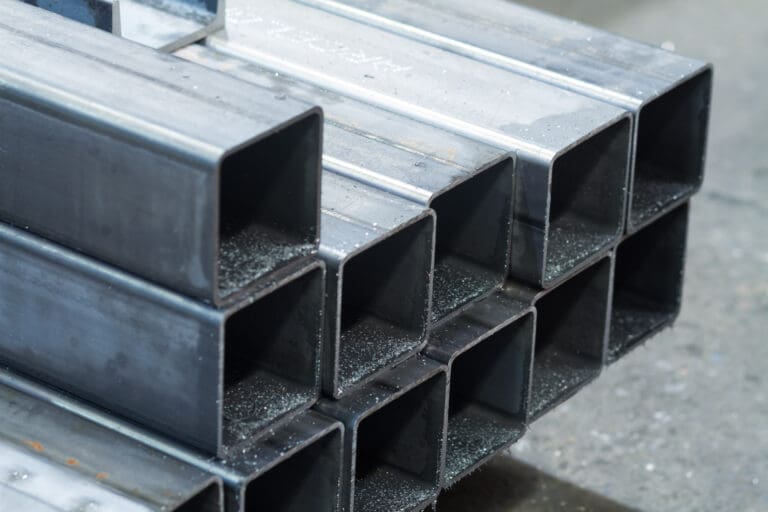
Carbon steel consists of iron and carbon with minimal alloying elements. It’s known for being highly durable and cost-effective. For these reasons, it’s commonly used in structural components, industrial machinery, material-handling equipment, and fabricated metal products.
Depending on the carbon content, carbon steel provides different levels of hardness, tensile strength, and machinability. Low-carbon steel is excellent for welding and forming, while higher-carbon grades increase strength and wear resistance.
Benefits of Carbon Steel
- High strength-to-cost ratio
- Excellent machinability and fabrication capabilities
- Strong load-bearing performance
- Wide availability across industrial applications
- Lower initial material cost
Limitations of Carbon Steel
- Rusts when exposed to moisture without protection
- Requires coatings, paint, or regular maintenance in corrosive environments
- Shorter service life in outdoor applications
What Is Galvanized Steel?
Galvanized steel is carbon steel that’s been dipped in a molten zinc bath. The zinc layer adds a protective barrier that shields the underlying steel from moisture, oxidation, and environmental exposure. This galvanization process significantly improves the metal’s corrosion resistance and service life.
In our experience, galvanized steel meets the challenging environmental demands of many industrial, agricultural, HVAC, filtration, and architectural applications
Benefits of Galvanized Steel
- Excellent corrosion resistance
- Long service life in outdoor environments
- Lower maintenance requirements
- Protective zinc coating offers sacrificial corrosion protection
- Suitable for harsh industrial conditions
Limitations of Galvanized Steel
- Higher upfront material cost
- Additional considerations during welding
- Zinc coating can wear over time in highly abrasive environments
Galvanized vs Carbon Steel: Key Performance Differences
Corrosion Resistance
The most significant difference between galvanized and carbon steel is corrosion resistance. Unprotected carbon steel can quickly rust when it’s exposed to moisture, humidity, or chemicals. Galvanized steel, on the other hand, uses its zinc coating to prevent corrosion and protect the underlying substrate. Even if minor surface damage occurs, the zinc continues to provide sacrificial protection.
Strength and Structural Performance
Carbon steel typically provides greater mechanical strength than galvanized steel, especially when engineers select medium- or high-carbon grades. While galvanized steel retains the strength of its base steel, engineers generally choose it for corrosion protection rather than improved durability.
Fabrication and Welding
Many engineering teams prefer carbon steel for fabrication because of how easily it cuts, forms, and welds. Welding galvanized steel, on the other hand, means heating the zinc coating, which can create fumes and affect the weld quality. To get around this, fabricators typically remove the coating material from the weld zones, then restore the corrosion protection after fabrication.
Lifecycle Costs
Carbon steel is typically considered to be more affordable. However, galvanized steel often has a lower total ownership cost in corrosive environments because it reduces maintenance, repair, and premature replacement costs. We’ve found that many industrial customers save money over time when they choose galvanized steel for outdoor or high-humidity applications.
When Should Engineering Teams Choose Carbon Steel?
Engineering teams often select carbon steel when the priority is structural strength, fabrication, flexibility, and budget.
- Heavy-duty industrial machinery
- Indoor manufacturing systems
- Structural support components
- Machine frames and fabricated assemblies
- Applications with minimal environmental exposure
Carbon steel is a practical solution for manufacturers who can manage corrosion protection through coatings, paint systems, or controlled operating conditions.
When Should Engineering Teams Choose Galvanized Steel?
Galvanized steel is often the best solution when environmental conditions create ongoing corrosion risks.
- Outdoor industrial equipment
- Agricultural systems and grain handling equipment
- HVAC and ventilation components
- Filtration systems
- Architectural metal products
- Material handling equipment exposed to moisture
We regularly see galvanized steel perform well in agricultural, architectural, filtration, and ventilation applications thanks to the zinc coating that helps maintain performance and reduce maintenance demands.
Choosing Between Galvanized and Carbon Steel
When comparing galvanized steel vs carbon steel, engineers must consider the application requirements. Carbon steel brings excellent strength, versatility, and affordability to projects.. Galvanized steel, on the other hand, brings extended service life and reduced maintenance thanks to its built-in corrosion protection.
In our experience, selecting the best material comes from understanding how the finished product will operate over its entire lifecycle. By matching a project’s environmental conditions, performance requirements, and maintenance expectations to the right material, engineering teams can improve reliability, reduce downtime, and maximize long-term value.
Frequently Asked Questions
Is galvanized steel stronger than carbon steel?
No. Carbon steel generally offers greater mechanical strength. Galvanized steel provides corrosion resistance through its zinc coating, but that coating doesn’t significantly increase the underlying steel’s structural strength.
Does galvanized steel rust?
Galvanized steel can eventually corrode, but the zinc coating slows the process considerably. The coating protects the underlying steel and often provides decades of service in many environments.
Which material costs more, galvanized steel or carbon steel?
Galvanized steel typically costs more upfront because of the galvanization process. However, lower maintenance requirements can reduce total lifecycle costs in corrosive environments.
What industries commonly use galvanized steel?
Agriculture, HVAC, filtration, construction, architecture, transportation, and material handling industries frequently use galvanized steel because of its corrosion-resistant properties.
How Roy Manufacturing Helps Customers Select the Right Steel
You should never choose your material based on price alone. Environmental conditions, expected service life, fabrication requirements, maintenance expectations, and overall lifecycle costs all have to be considered. Before selecting galvanized or carbon steel, we recommend evaluating your project’s:
- Exposure to moisture or chemicals
- Required structural strength
- Expected maintenance schedule
- Fabrication and welding requirements
- Long-term replacement costs
- Budget constraints
At Roy Manufacturing, we help customers identify the material that aligns with their application requirements. Whether a project requires the corrosion resistance of galvanized steel or the strength and economy of carbon steel, our team supports custom perforated, fabricated, and machined solutions built to spec. Contact us today for a same-day quote.