Profile Laser Knowledge Base
While laser cutting delivers speed and efficiency for creating complex shapes, secondary machining operations after laser cutting help refine the final product for a superior fit and finish.
Combining precision laser cutting with machining results in higher-quality assemblies, reduced rework, and more reliable end-use performance. In fact, it’s a non-negotiable step for manufacturers who require tighter tolerances, smoother surfaces, and improved component performance. At Roy Manufacturing, we’ve seen how industries from agriculture to transportation benefit from this hybrid approach.
Why Is Machining After Laser Cutting Important?
Machining after laser cutting improves dimensional accuracy, edge quality, surface finish, and part consistency. Secondary machining processes like milling, drilling, tapping, and deburring refine laser-cut components to tighter tolerances and ensure better fit during assembly. This approach helps manufacturers reduce production errors, improve product durability, and meet strict industrial standards.
How Laser Cutting Supports Modern Manufacturing
Laser cutting is one of the most efficient fabrication methods for producing complex metal components quickly and accurately. The process uses concentrated laser energy to cut materials with minimal waste while maintaining consistent repeatability.
Manufacturers often choose laser cutting for its:
- Fast production speeds
- High repeatability
- Complex geometry capabilities
- Reduced material waste
- Efficient prototyping and short-run production
- Minimal tooling requirements
However, even highly advanced laser systems can leave minor edge imperfections, heat-affected zones, or dimensional variations that require secondary processing. In our experience, this is where precision machining adds considerable value to the manufacturing process.
Benefits of Machining After Laser Cutting
Improved Dimensional Accuracy
Laser cutting is known for its extreme accuracy. Certain applications, though, require tolerances beyond what laser cutting alone can consistently deliver. That’s where secondary operations come in. These processes help refine critical dimensions, ensuring parts meet exact specifications.
For components that must align perfectly during assembly, post-laser machining can:
- Improve hole positioning accuracy
- Refine mating surfaces
- Ensure flatness and squareness
- Create tighter tolerances for precision assemblies
We’ve seen how machining after laser cutting creates tighter tolerances, significantly reducing assembly issues and downstream production delays.
Better Surface Finish
Depending on the material type, laser-cut edges may have a slight roughness, oxidation, or burrs. For manufacturers producing visible or customer-facing components, this surface quality directly impacts perceived product quality and brand reputation. Machining after laser cutting addresses this by giving edges a cleaner appearance and improved functionality.
Common finishing improvements include:
- Deburring sharp edges
- Smoothing cut surfaces
- Creating uniform finishes
- Improving coating or paint adhesion
Enhanced Fit During Assembly
For welded assemblies, mechanical systems, and structural fabrication, proper fit is paramount. Even minor inconsistencies can create alignment problems that slow production and increase labor costs.
Machining after laser cutting helps ensure:
- Consistent hole diameters
- Accurate slot dimensions
- Proper alignment between mating components
- Reduced gaps and misalignment
We recommend incorporating secondary machining for assemblies that require repeatable precision across large production runs.
Common Machining Processes Used After Laser Cutting
Drilling and Tapping
Laser cutting can create holes, and machining operations can improve the accuracy of those holes, as well as the threading quality. Drilling and tapping are essential secondary operations when components need threaded fasteners or exact hole sizing.
Secondary drilling helps:
- Maintain consistent hole diameters
- Improve thread quality
- Reduce fastener fitment issues
- Enhance structural reliability
Deburring and Edge Finishing
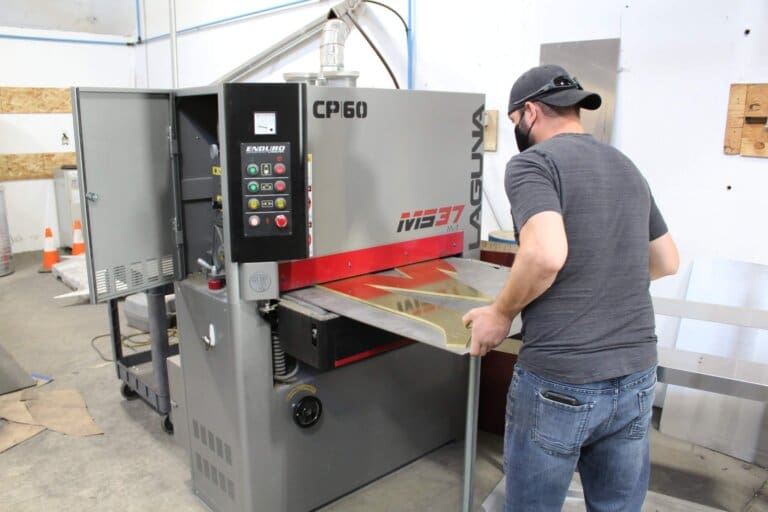
Deburring removes sharp edges and imperfections left during the cutting process. It improves both safety and product appearance.
Edge finishing also helps prepare components for:
- Powder coating
- Plating
- Welding
- Final assembly
Countersinking
Countersinking creates a beveled opening around a pre-cut hole. This allows flat-head screws or fasteners to sit flush with the surface of the material.
Countersinking is commonly used for:
- Flush-mounted fasteners
- Improved assembly alignment
- Cleaner finished appearance
- Reduced interference between components
- Enhanced structural integrity
- Better surface preparation for coatings or finishing
Our team recommends precision countersinking for industrial equipment, transportation components, and structural assemblies where fit and finish directly impact product quality and long-term performance.
Industries That Benefit from Machining After Laser Cutting
Several industries rely on machining services after laser cutting to achieve production-grade quality.
- Industrial Equipment Manufacturing: Industrial machinery components often require high precision and reliable assembly performance. Machining after laser cutting helps ensure these components fit correctly under demanding operational conditions.
- Agricultural Equipment: Agricultural machinery is subject to constant vibration, stress, and environmental exposure. Precision machining helps improve durability and component alignment in these harsh conditions.
- Automotive and Transportation: Automotive manufacturers depend on tight tolerances and consistent fitment across thousands of parts. Secondary machining ensures repeatability and quality control throughout production.
- Heavy Equipment and Structural Fabrication: Heavy-duty fabricated components often require post-processing to ensure accurate weld preparation and consistent assembly. Machining improves both structural integrity and installation efficiency.
How Precision Manufacturing Improves Long-Term Performance
Precision manufacturing leads to a better fit and finish. That, in turn, directly affects the component’s long-term reliability, wear resistance, and operational performance. We’ve found that manufacturers who invest in secondary machining typically see:
- Reduced field failures
- Lower warranty claims
- Improved assembly speed
- Reduced rework costs
- Higher customer satisfaction
In highly competitive industries, these improvements can create meaningful operational advantages.
Frequently Asked Questions
What is machining after laser cutting?
Machining after laser cutting refers to secondary manufacturing processes such as milling, drilling, tapping, or deburring to improve the precision and finish of laser-cut parts.
Why are secondary machining operations necessary?
Secondary machining operations improve dimensional accuracy, surface finish, and assembly fit when laser cutting alone can’t achieve the required tolerances or edge quality.
What industries use machining after laser cutting?
Industries including industrial manufacturing, agriculture, automotive, transportation, and heavy equipment fabrication commonly use machining after laser cutting to improve precision and reliability.
Why Manufacturers Choose Profile Laser
By integrating machining after laser cutting, manufacturers can achieve superior precision, cleaner assemblies, and more reliable finished products. At Profile Laser, we offer the added benefit of doing it all under one roof.
Our integrated manufacturing approach allows customers to streamline their production while meeting strict quality standards. We’ve been delivering high-quality fabricated components for demanding industries for 68 years. Contact us today for a same-day quote and put our experience to work for you.