Profile Laser Knowledge Base
Complex assemblies demand precision, consistency, and efficient production. Whether it’s avionics systems, diagnostic imaging equipment, or custom heavy machinery lines, every component must fit together perfectly. At Profile Laser, we’ve seen how metal fabrication meets these exacting demands, and how it streamlines complex assemblies.
A full-service fabrication partner simplifies the entire process by managing every stage from raw material to finished assembly. With multiple processes under one roof, companies can avoid the scheduling conflicts, dimensional inconsistencies, and longer lead times that often come with working with multiple vendors. The result? Improved quality, reduced costs, and products reaching the market faster.
How Does Metal Fabrication Streamline Complex Assemblies?
Metal fabrication streamlines complex assemblies by integrating laser cutting, forming, machining, welding, hardware insertion, and finishing into one coordinated production process. Consolidating manufacturing operations like this improves accuracy, reduces supplier handoffs, shortens lead times, minimizes assembly errors, and delivers components that fit together correctly the first time.
How Do Complex Assemblies Create Manufacturing Challenges?
Modern products rarely consist of just a handful of simple parts. Manufacturers are now designing equipment with tighter tolerances, more integrated features, and increasingly sophisticated mechanical systems. As the assemblies become more complex, every step in the manufacturing process must maintain exceptional precision.
Managing separate suppliers for each step of production is the fastest way to introduce unnecessary complexity to the process. One vendor cuts components, another bends them, a third welds them, and finally, one installs the hardware. Every handoff increases the odds of delays, communication issues, shipping damage, and dimensional variation.
In our experience, a full-service metal fabrication partner mitigates these risks by streamlining complex assemblies. Every department is under one roof, working from the same engineering data and quality standards, vastly improving production accuracy and efficiency.
Integrated Metal Fabrication Improves Complex Manufacturing Efficiency
When one fabrication partner manages multiple operations, production flows more smoothly from start to finish. Engineers, programmers, machine operators, and quality specialists collaborate throughout the project instead of working independently across multiple companies. This integrated workflow provides several advantages, including:
- Fewer production delays
- Improved dimensional consistency
- Lower transportation costs
- Simplified project management
- Better communication
- Reduced purchasing complexity
- Faster turnaround times
Rather than coordinating several production schedules, manufacturers can work with a single experienced fabrication team that oversees the entire project.
Precision Laser Cutting Creates Better Assembly Accuracy
Every successful assembly starts with accurately manufactured components. Even minor dimensional variations can create alignment problems that escalate throughout production.
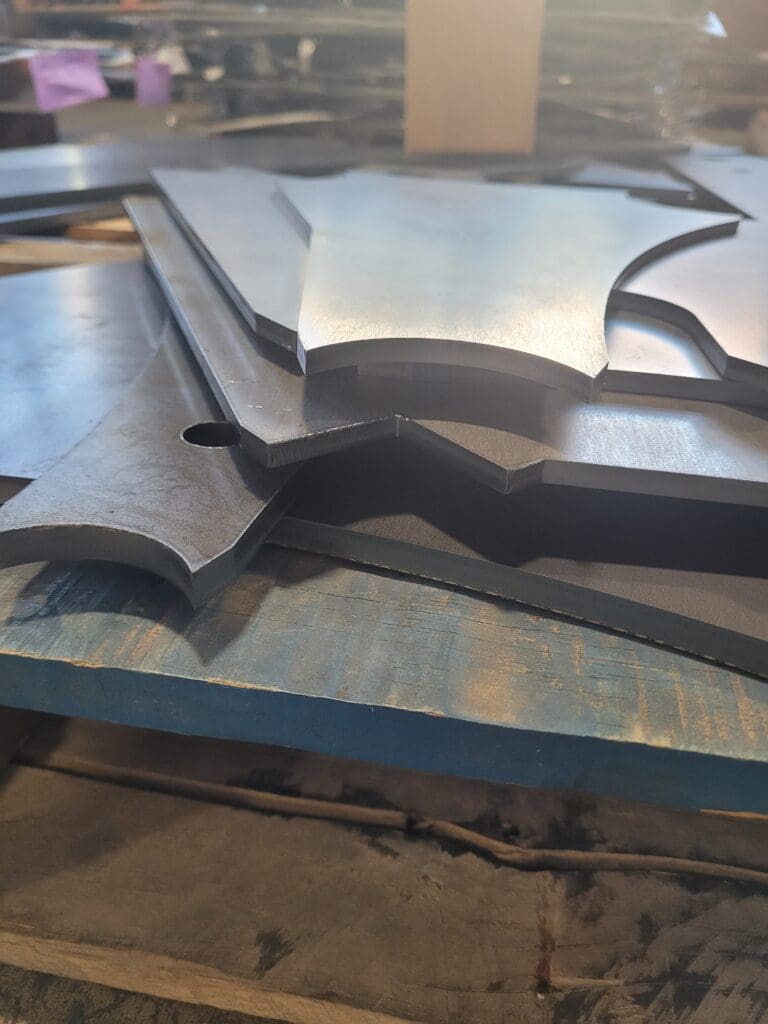
Advanced fiber laser cutting systems produce the highly accurate parts that complex assemblies require. Precision cutting delivers clean edges and tight tolerances, so every component fits exactly how the engineer intended. With laser cutting, manufacturers can produce:
- Complex geometries
- Precise mounting holes
- Tabs and slots for self-locating assemblies
- Intricate vent patterns
- Custom cutouts
- Consistent repeatability across production runs
At Profile Laser, we’ve seen how accurate components mean production teams can work more efficiently by bypassing manual fitting during assembly.
Precision Forming Eliminates Fitment Problems
Laser cutting is only one way metal fabrication streamlines complex assemblies. Components often require multiple bends that maintain precise angles and dimensions. Accurate forming ensures each component properly aligns with adjoining parts during final assembly.
We recommend designing fabricated components with manufacturability in mind. Small design adjustments can reduce fabrication time and improve assembly performance.
Welding and Assembly Services Reduce Production Bottlenecks
Many manufacturers prefer receiving partially or fully assembled products rather than individual fabricated parts. Instead of receiving hundreds of individual components, customers receive completed weldments or finished subassemblies that are ready for installation into larger products.
This metal fabrication approach streamlines complex assemblies and offers several advantages:
- Lower internal labor costs
- Reduced inventory management
- Fewer assembly errors
- Improved production scheduling
- Shorter manufacturing cycles
- Higher overall product consistency
Hardware Insertion Adds Value Before Final Assembly
Many fabricated components require PEM® fasteners, threaded studs, standoffs, captive nuts, or other hardware before final assembly. Installing that hardware during metal fabrication not only ensures every fastener sits correctly, it helps streamline complex assemblies. When production teams receive components with the hardware already installed, they can focus on higher-value assembly work rather than repetitive secondary operations.
Based on client results, combining cutting, forming, welding, and hardware insertion into one production workflow consistently reduces manufacturing complexity and improves product quality.
Surface Finishing Protects Complex Fabricated Assemblies
Surface finishing is important for both product performance and appearance. Depending on the application, fabricated assemblies may need powder coating, plating, anodizing, painting, or other protective finishes. Coordinating finishing as part of the fabrication process streamlines production and ensures every component meets the customer’s specifications.
When fabrication teams understand the finishing requirements early in the project, they can account for coating thickness, masking requirements, weld preparation, and cosmetic surfaces before production begins. This early planning helps prevent rework and enables consistent assembly quality.
Quality Control Keeps Every Assembly on Spec
Complex assemblies leave little to no room for error. Every laser-cut profile, formed flange, welded joint, and installed fastener contributes to the finished product’s performance. This is another area where keeping your metal fabrication under one roof streamlines complex assemblies.
Monitoring quality during each manufacturing stage helps identify issues early, which reduces scrap and avoids costly production delays. We’ve found that proactive inspections throughout the fabrication process consistently produce better outcomes than solely relying on end-of-the-line quality checks.
How Streamlined Metal Fabrication Reduces Total Manufacturing Costs
Many manufacturers evaluate fabrication costs by comparing individual part prices. However, working with multiple suppliers creates hidden expenses that include:
- Additional shipping and freight costs
- Multiple purchase orders and vendor management
- Production scheduling delays
- Receiving and inventory handling
- Increased quality inspections
- Engineering coordination across vendors
- Longer lead times
- Assembly labor caused by inconsistent parts
Streamlining complex assemblies under one experienced manufacturer eliminates many of these inefficiencies. Customers are able to spend less time coordinating vendors and more time focusing on product development, production, and customer delivery.
Industries That Benefit from Streamlined Complex Assemblies
Nearly every manufacturing sector benefits from integrated fabrication services, especially industries that demand precision, repeatability, and dependable production schedules. Common applications include:
- Industrial equipment
- Material handling systems
- Agricultural equipment
- Data center infrastructure
- Medical equipment
- Electronics enclosures
- Transportation equipment
- Energy systems
- Automation and robotics
These industries often require hundreds of precision components working together within a single assembly. An experienced fabrication partner helps ensure every part contributes to consistent product performance.
Frequently Asked Questions
What is a complex assembly in metal fabrication?
A complex assembly consists of multiple fabricated components that require precise cutting, forming, welding, fastening, and finishing to function together as a complete product.
How does integrated metal fabrication improve quality?
Integrated fabrication reduces supplier handoffs, improves communication, maintains tighter quality control, and ensures every manufacturing process follows the same engineering specifications.
Can one fabrication partner handle multiple manufacturing processes?
Yes. Full-service fabrication companies often provide laser cutting, forming, welding, hardware insertion, and assembly services, allowing customers to simplify production through a single manufacturing partner.
Why does supplier consolidation reduce manufacturing costs?
Working with one fabrication partner reduces transportation, purchasing, scheduling, inventory management, and quality control costs while improving production efficiency and shortening lead times.
Why Choose Profile Laser for Complex Metal Fabrication?
At Profile Laser, we provide comprehensive fabrication solutions that simplify complex manufacturing projects from concept through production. Our capabilities include precision laser cutting, forming, welding, hardware insertion, and other fabrication services that help manufacturers streamline their production.
Whether your project requires prototype development or high-volume production, our experienced team works closely with your engineers to deliver fabricated components that meet demanding specifications and support efficient assembly.
Contact us for a same-day quote to see how we can help shorten your lead times, improve part consistency, and streamline your entire manufacturing operation.